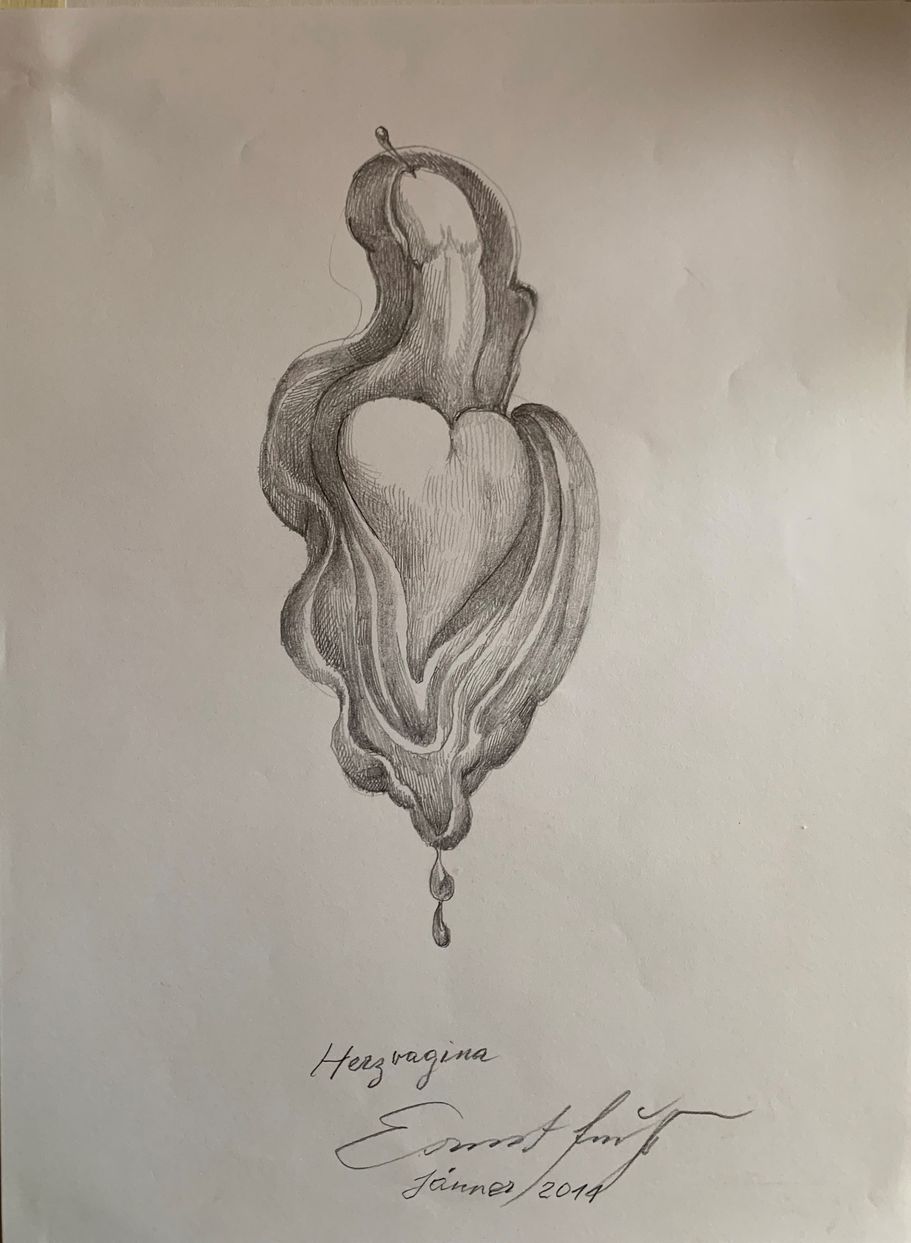
Fantastic Realism combines visible reality with dreams, mythology and imagination. Its most significant expression emerged after 1945 in the Vienna School of Fantastic Realism, whose artists – including Ernst Fuchs, Arik Brauer and Rudolf Hausner – combined surrealist imagery with the technical precision of the Old Masters.
This artistic movement occupies a special place within the E. Schuster Collection. The collection encompasses works by Ernst Fuchs, one of the movement's co-founders, as well as the fantastic realist works of Herbert Duttler. Their multifaceted visual worlds bring together ancient mythology, symbolism, dreams and human existence.
Fantastic Realism thus becomes a fascinating realm between reality and imagination – rooted in traditional painting techniques while possessing a timeless imaginative power.
Herbert Duttler - Fantastic Realism
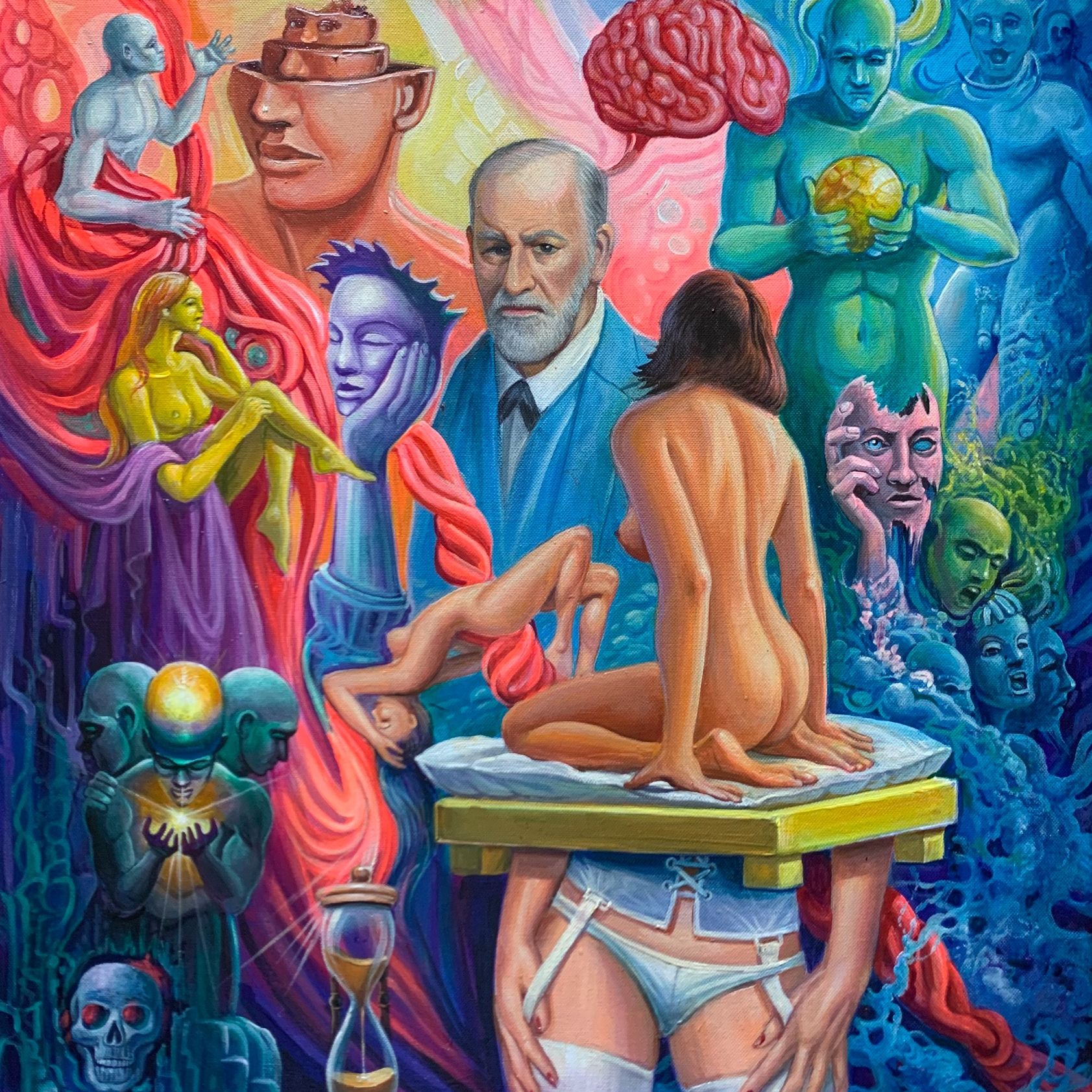
Since 2010, Herbert Duttler has devoted himself intensively to Fantastic Realism and Surrealism. His visionary imagery combines elements of the Vienna School with Symbolism, mythology and surreal dream worlds. His collaboration with Peter Petz, a pupil of Ernst Fuchs, was also a formative influence.
Within the E. Schuster Collection, this body of work represents a particularly important focus and documents Duttler's distinctive interpretation of Fantastic Realism.
Ernst Fuchs
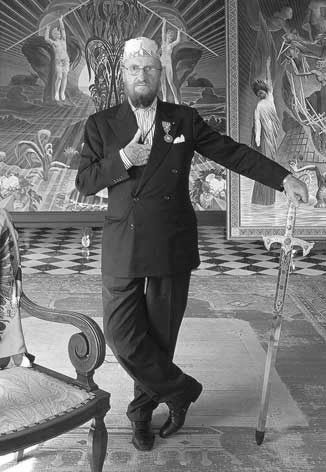
Ernst Fuchs (1930–2015) was one of the defining figures of Austrian post-war art and a co-founder of the Vienna School of Fantastic Realism. Together with Arik Brauer, Rudolf Hausner, Wolfgang Hutter and Anton Lehmden, he developed a visual language that combined surrealist and magical realist concepts with the technical precision of the Old Masters.
Fuchs' multifaceted oeuvre is characterised by mythology, religion, mysticism, symbolism and dream worlds. His extraordinary attention to detail and his intensive study of historical painting techniques gave his visionary compositions their distinctive character. Beyond painting and printmaking, Fuchs also worked as a sculptor, architect and designer.
Through his internationally recognised work, he became one of the most important representatives of Fantastic Realism and a central point of reference for subsequent generations of artists.
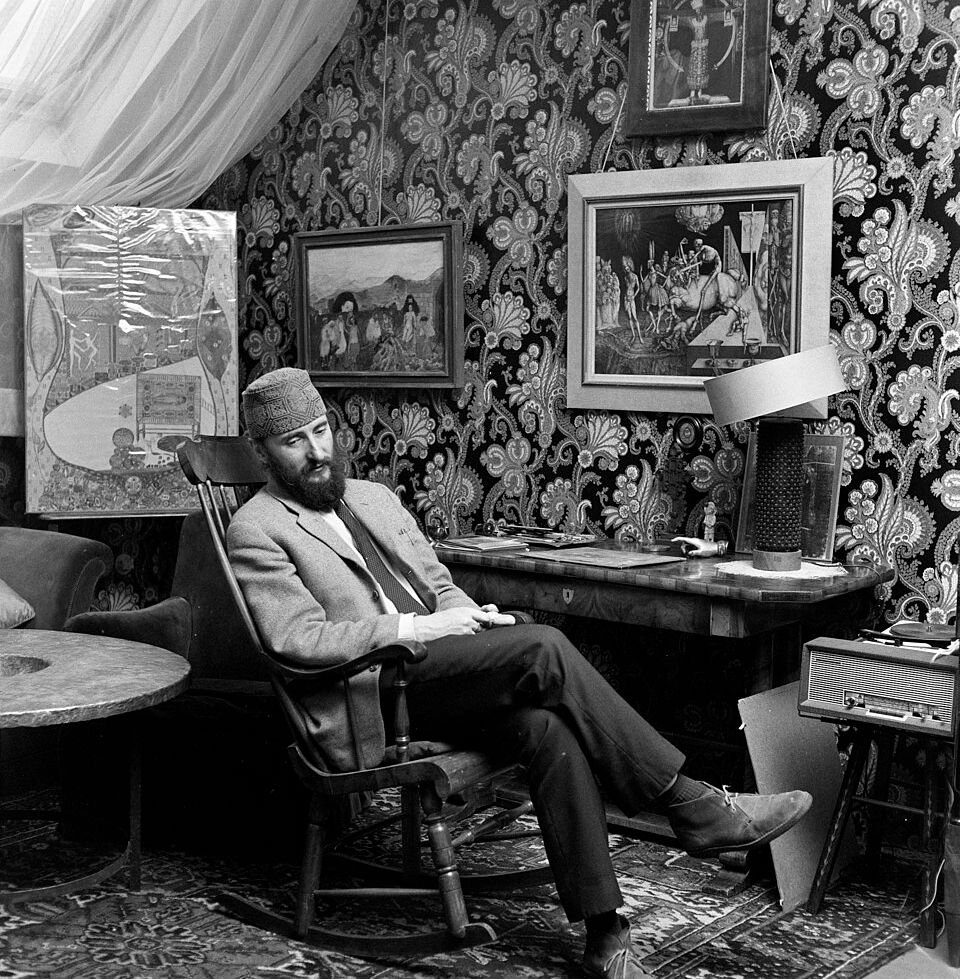
Foto: Gert Chesi / Wikimedia Commons · CC BY-SA 4.0
Etchings
Ernst Fuchs' etchings occupy a special place within his graphic oeuvre. They combine technical precision, delicate linework and an extraordinary wealth of detail with the visual worlds of mythology, religion, symbolism and fantasy that are characteristic of Fuchs. Particularly during the 1960s and 1970s, he created significant graphic cycles and editions that explore central motifs of his artistic universe.
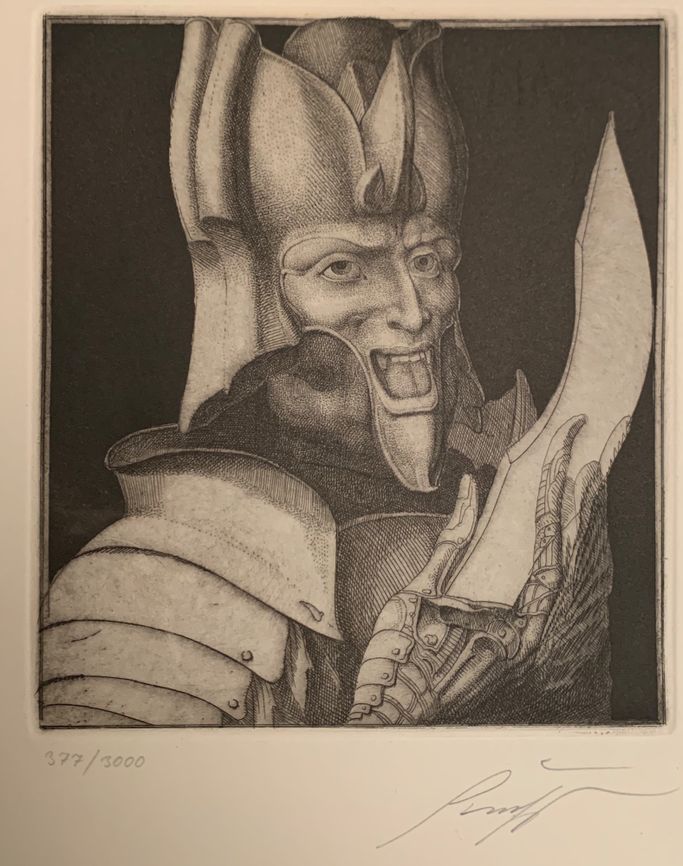
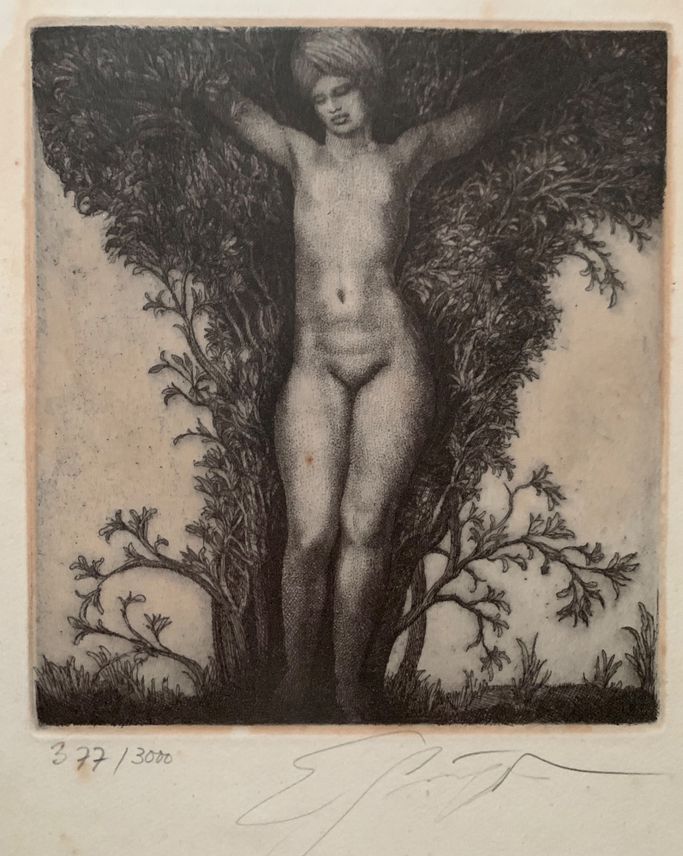
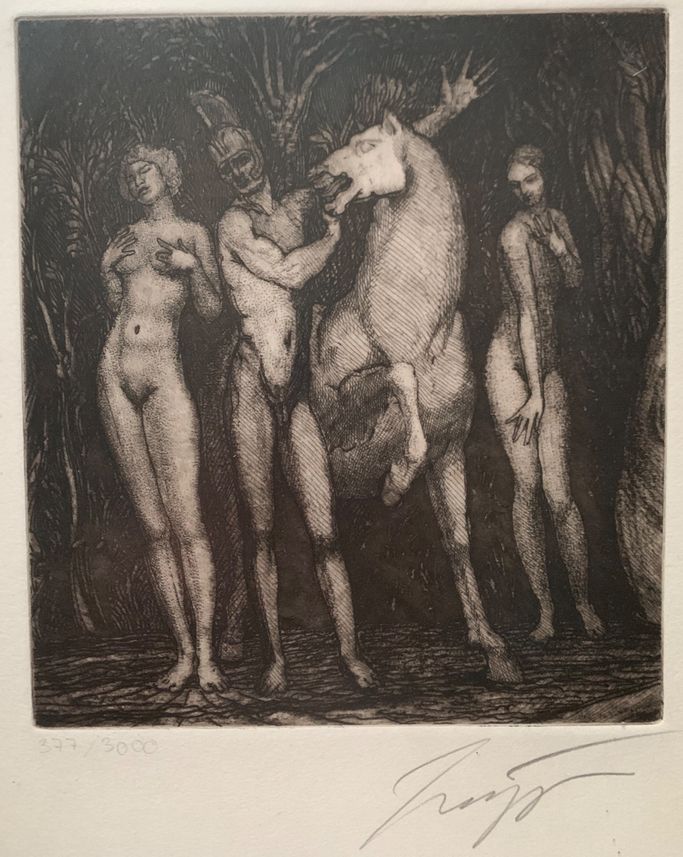
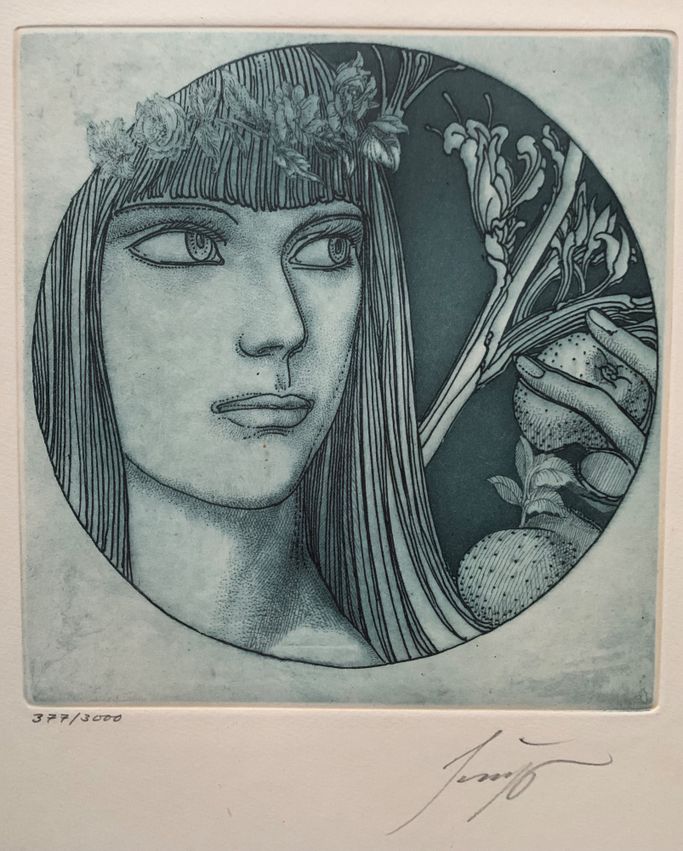
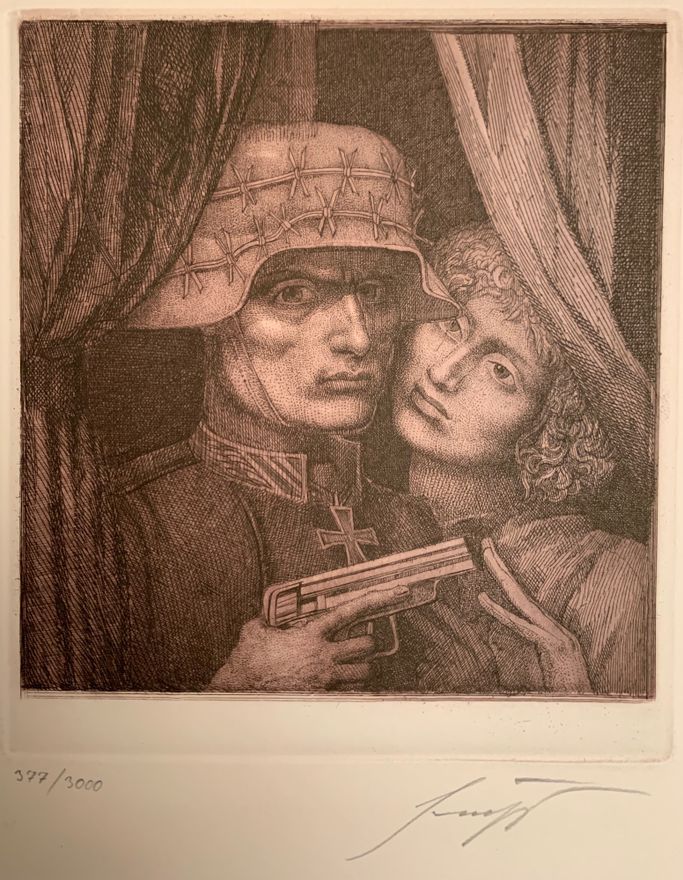
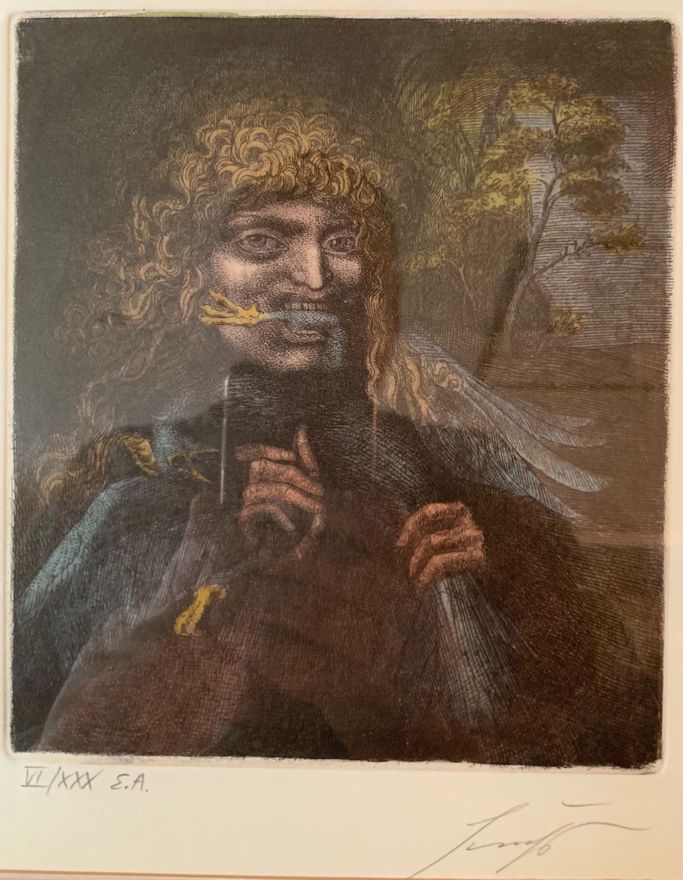
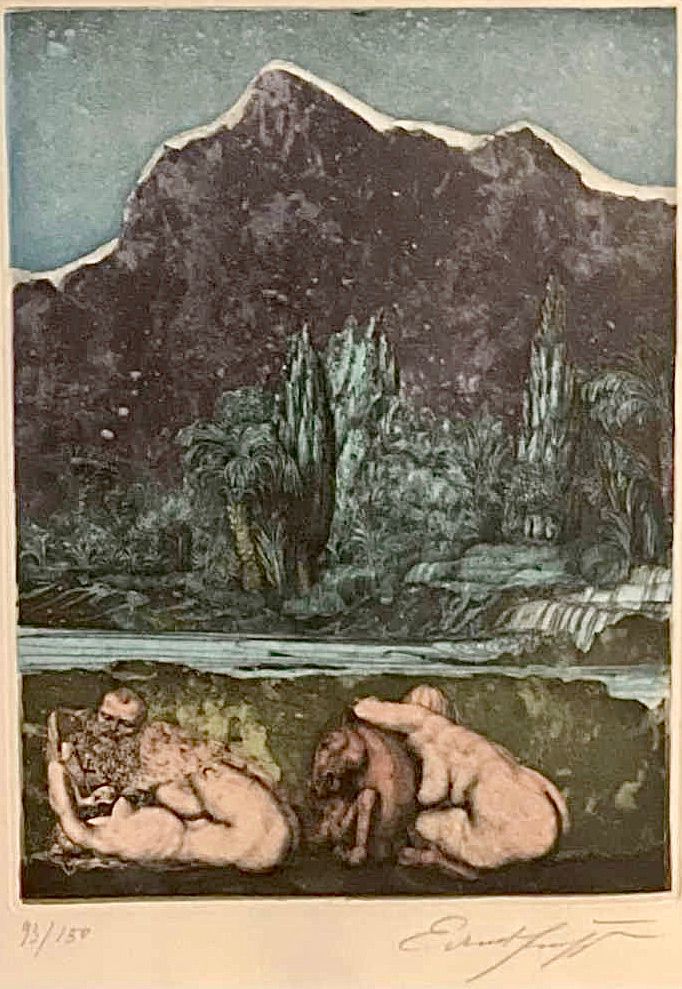
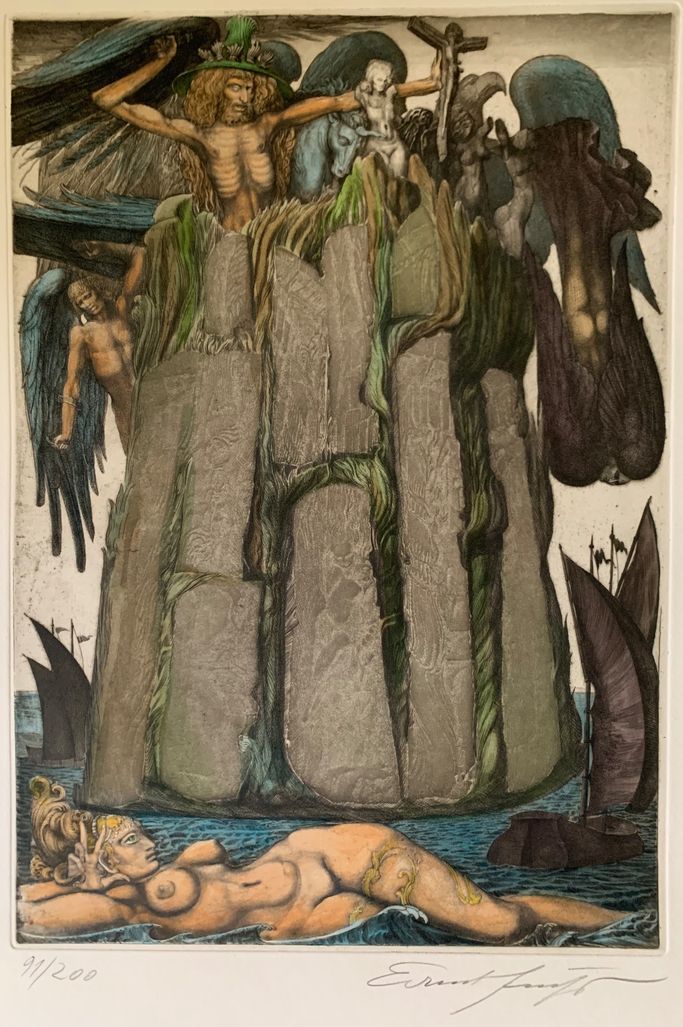
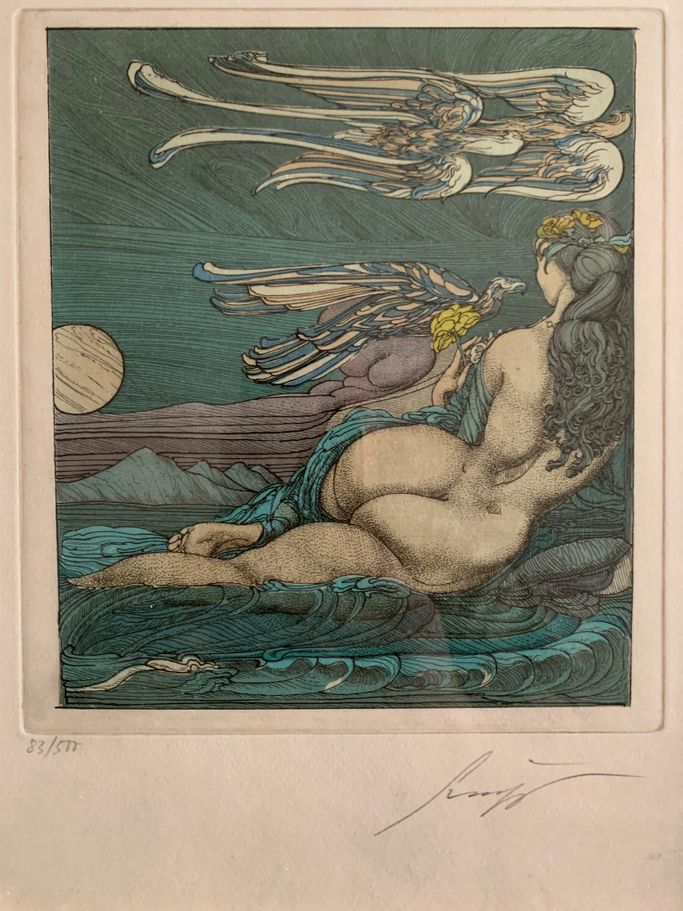
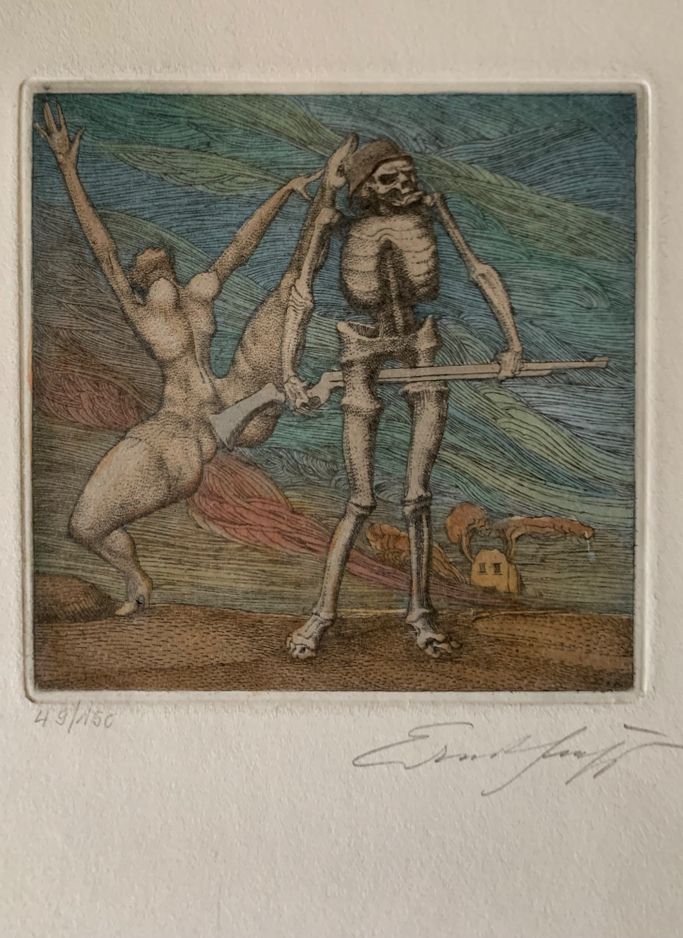
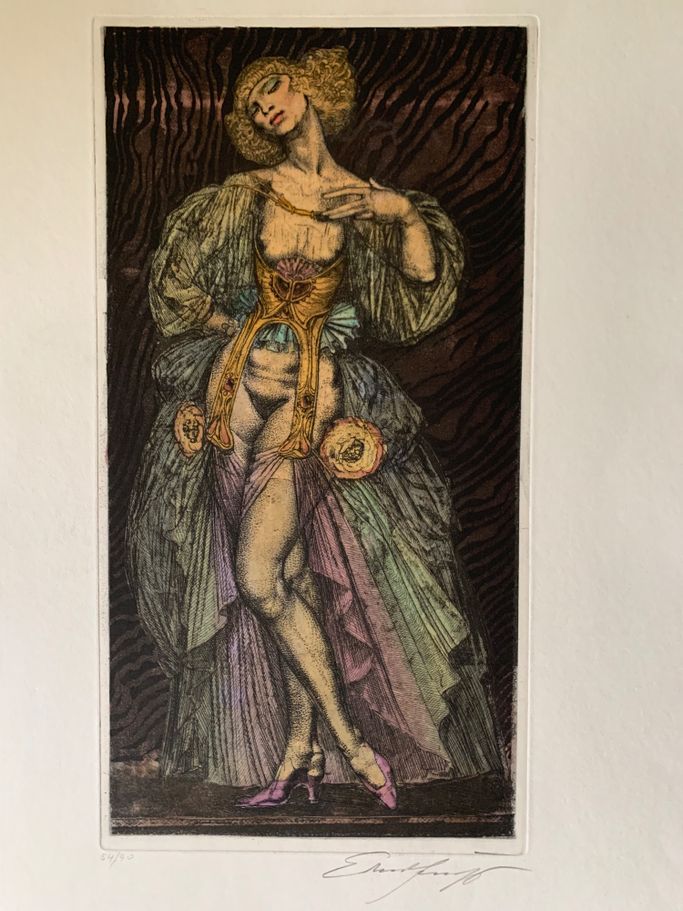
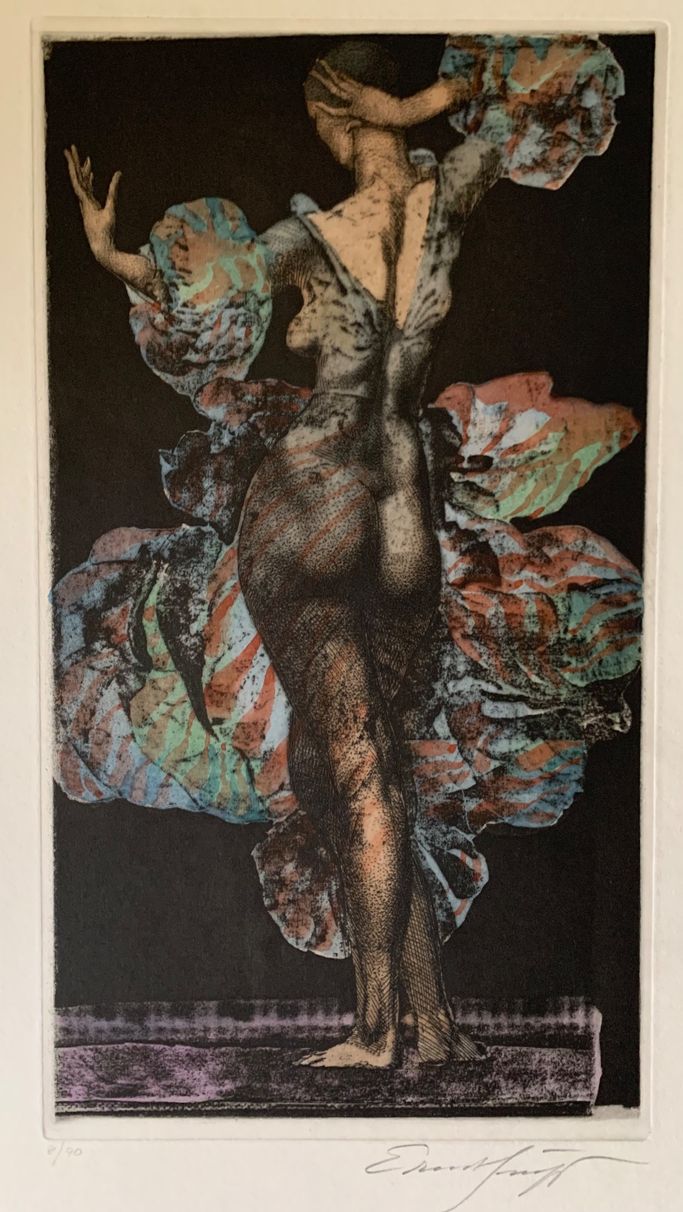
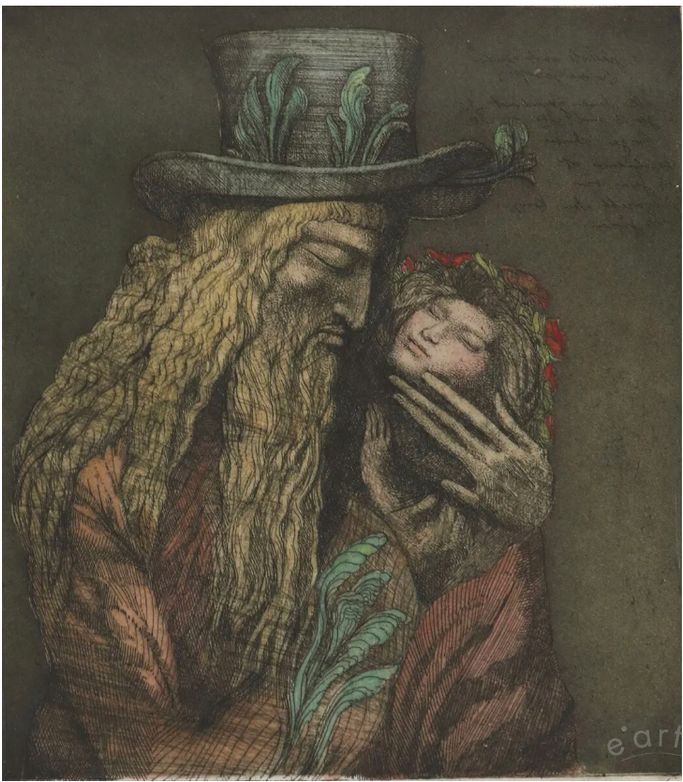
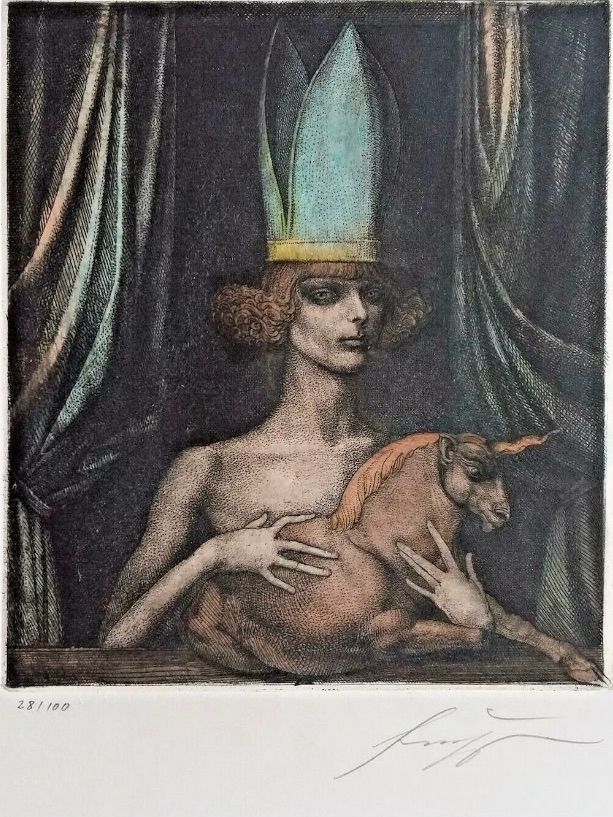
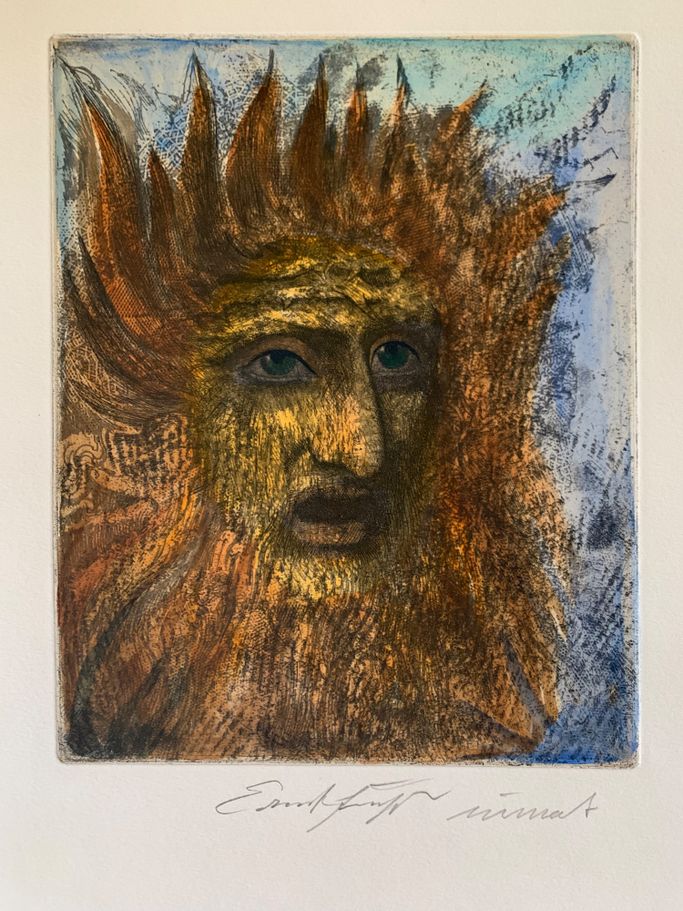
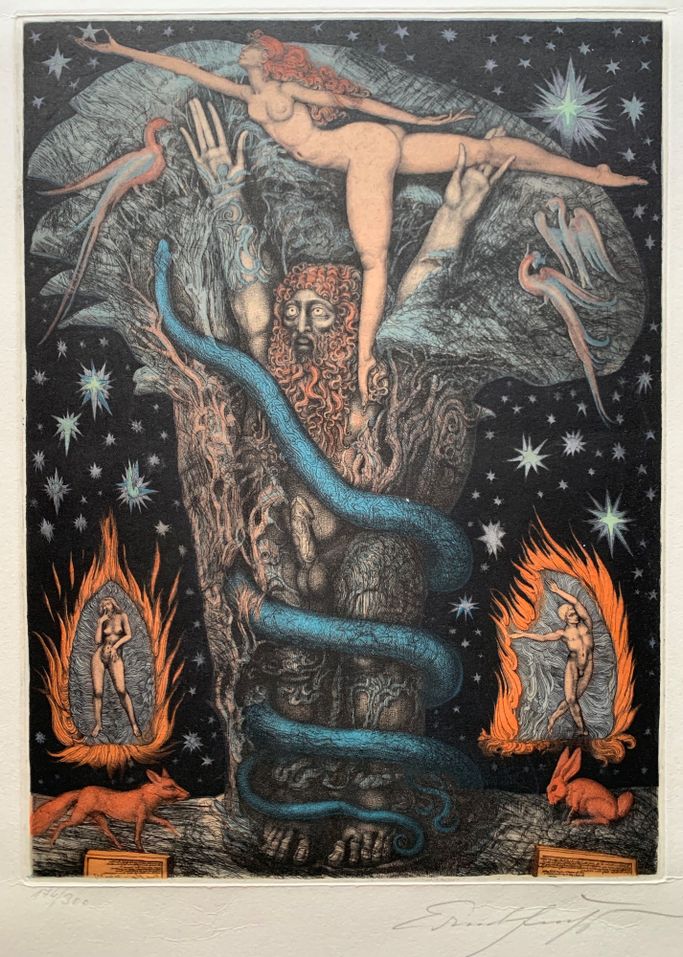
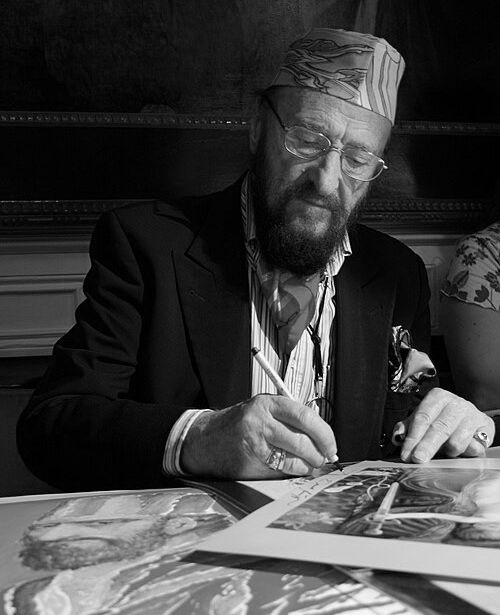
Foto: Tsui / Wikimedia Commons · CC BY-SA 3.0 · S/W
Hand-Signed Giclée Prints
Ernst Fuchs' hand-signed Giclée prints reproduce his characteristic, symbolically charged imagery using a high-quality modern printing process. The works represented in the E. Schuster Collection are personally signed and numbered by the artist, including rare artist's proofs and limited editions. Comparable works by Fuchs are documented as hand-signed and numbered Giclée prints on canvas.
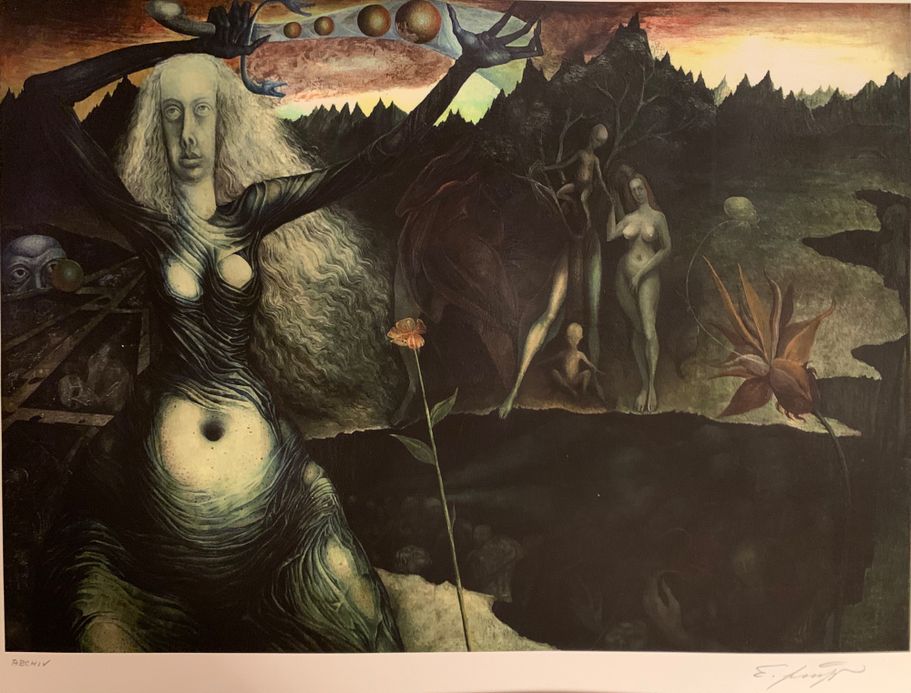
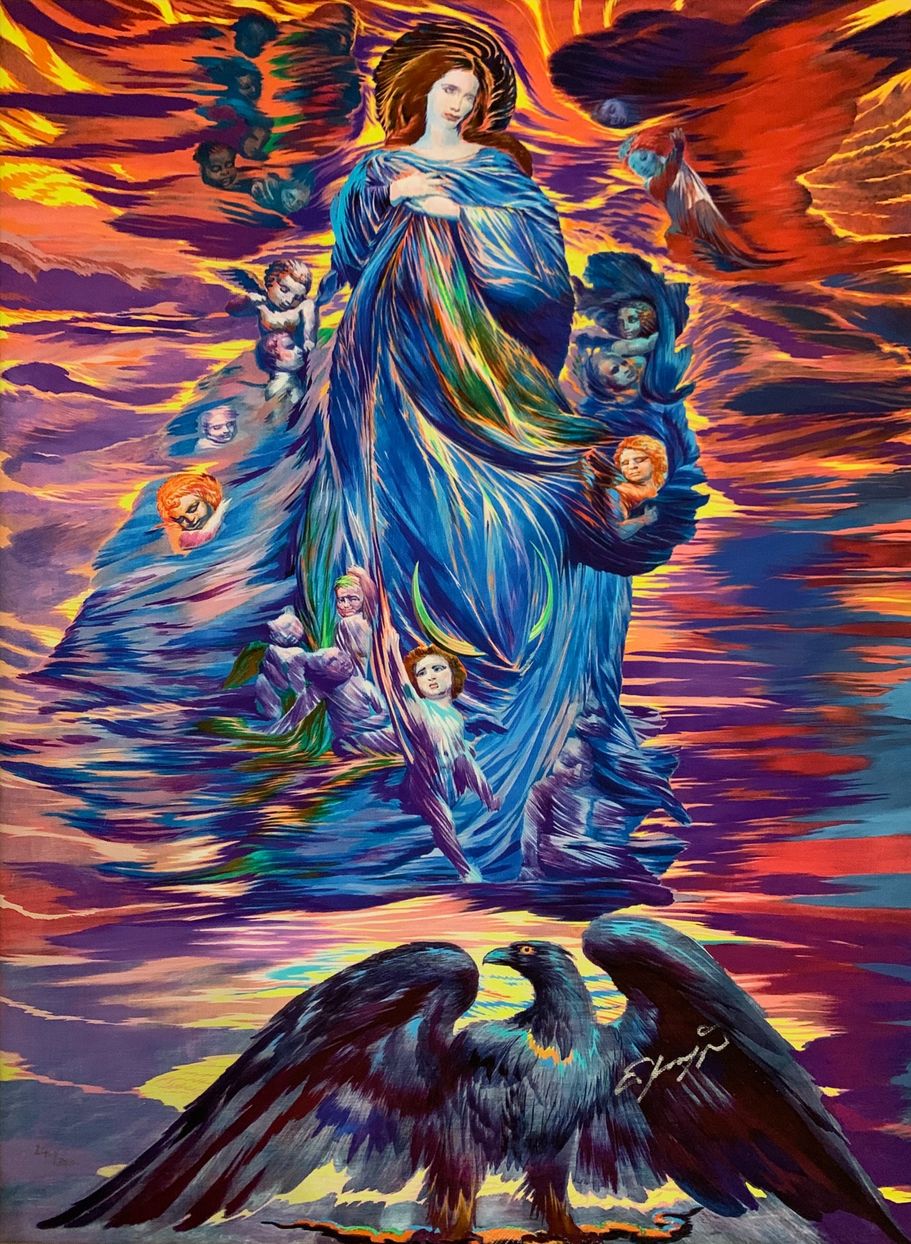
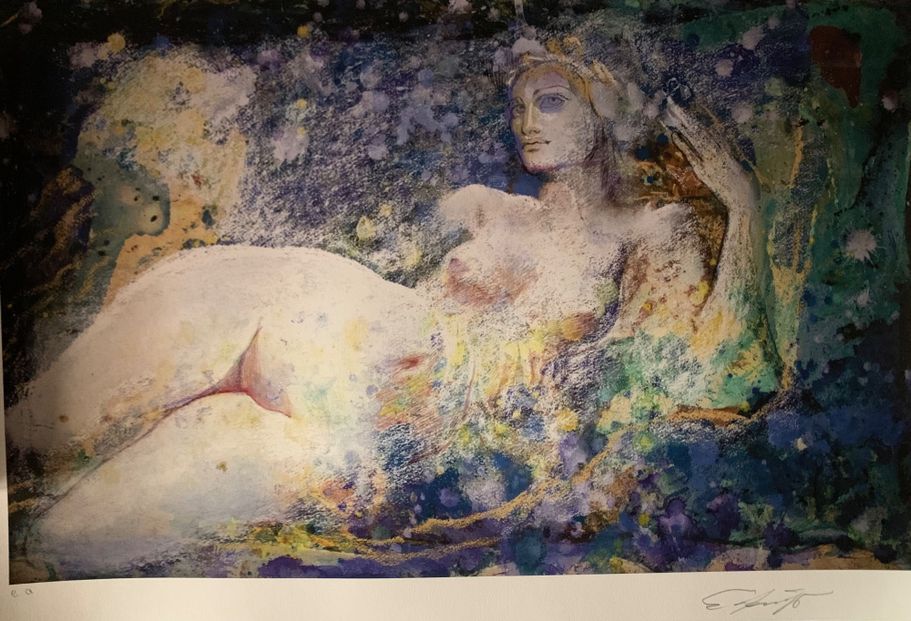
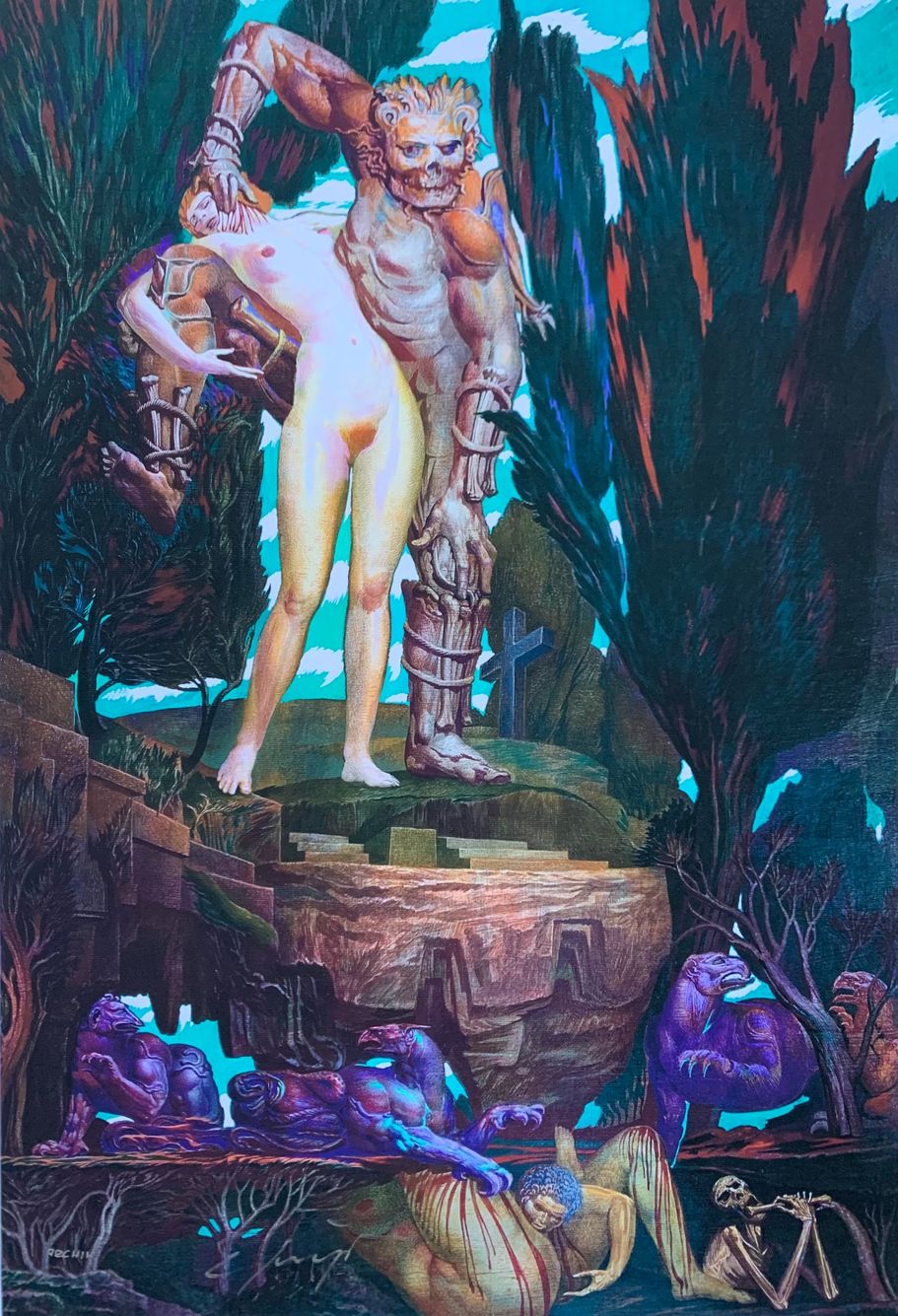
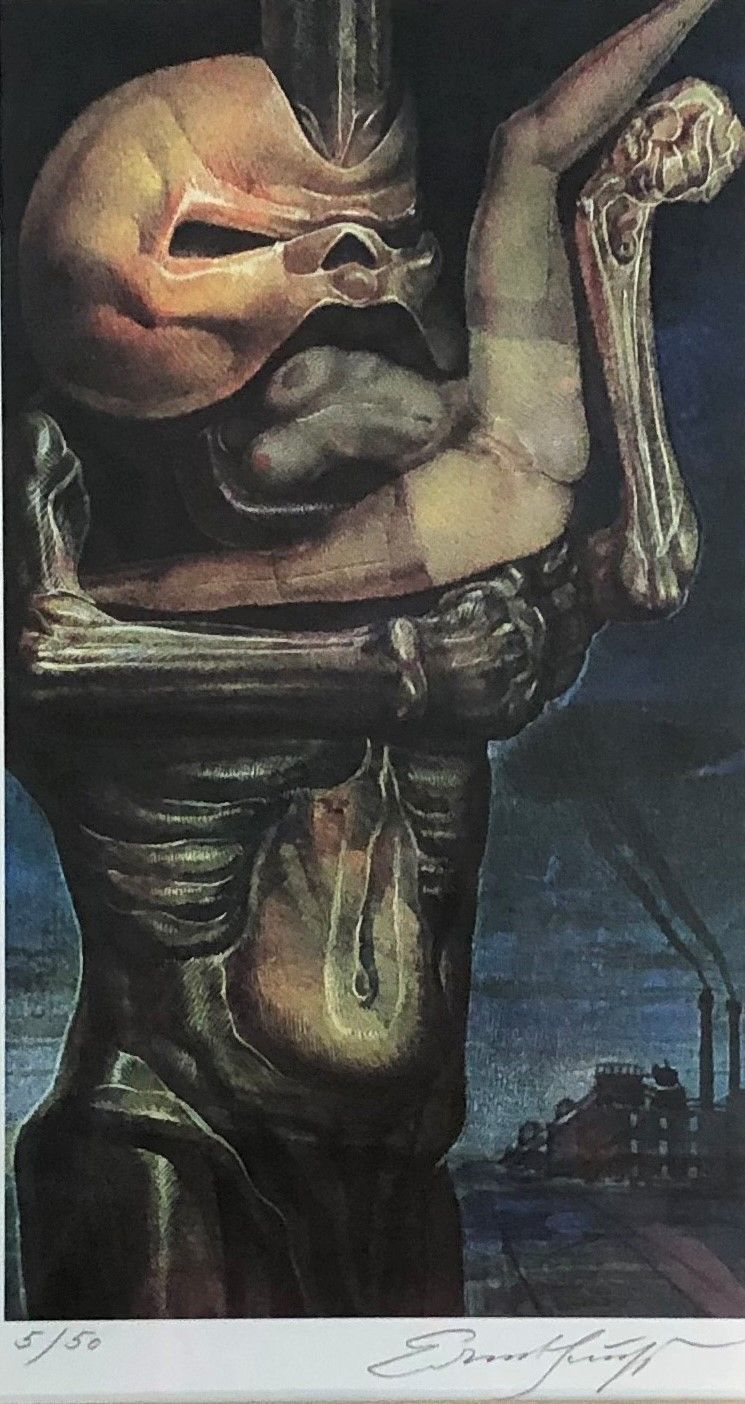
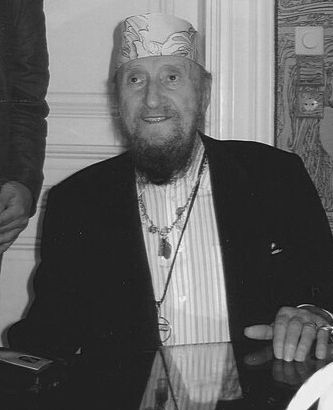
Foto: Robert Schediwy / Wikimedia Commons · CC BY-SA 4.0 · S/W, Bearbeitung des Bildausschnitts
Unique Works
Ernst Fuchs' unique works offer a particularly direct insight into his artistic style. As one-of-a-kind works created by the artist himself, they differ fundamentally from his graphic editions and reproduced works. Drawing and painting were essential components of his versatile oeuvre, characterised by religious and mythological symbolism as well as visionary imagery.