Herbert Duttler
Old Masters
In dialogue with the great masters of European painting
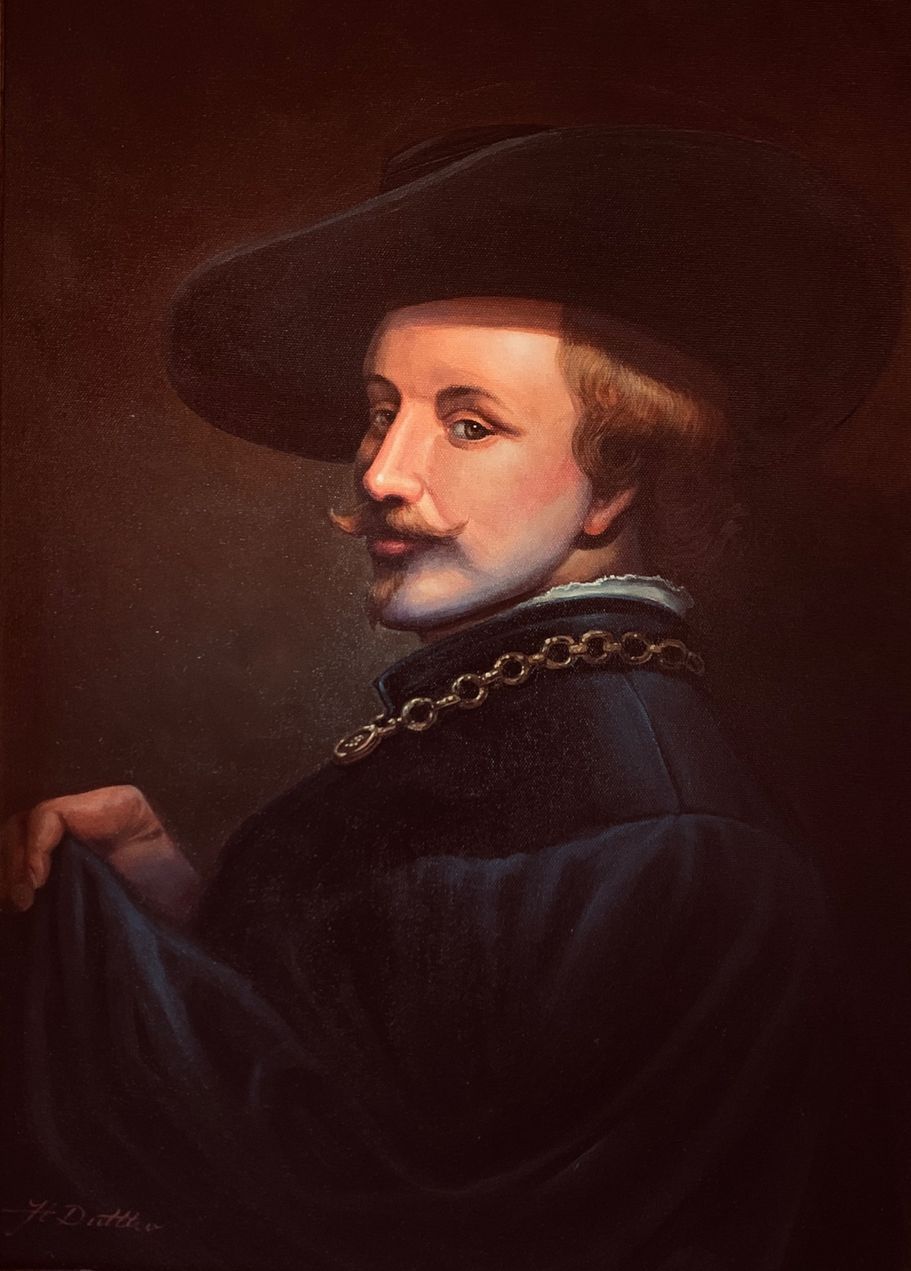
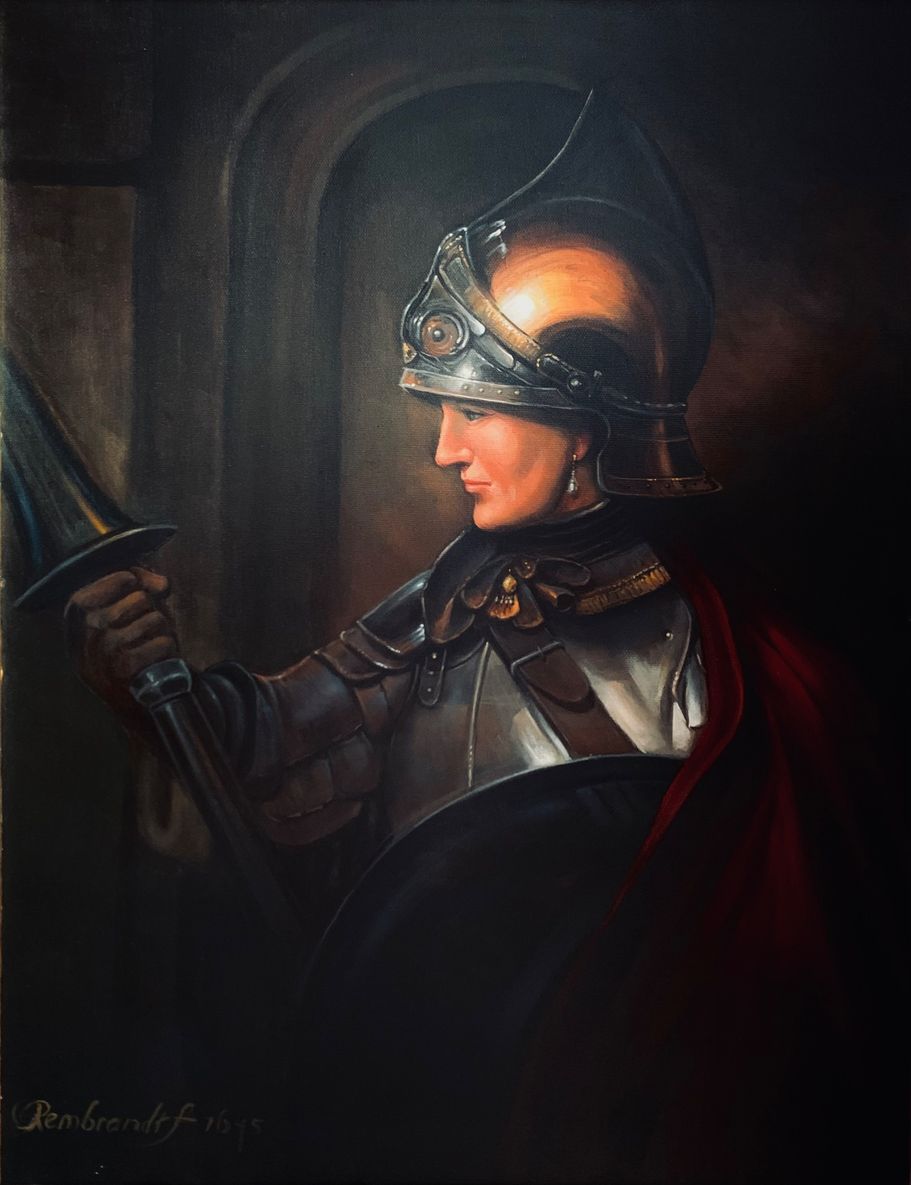
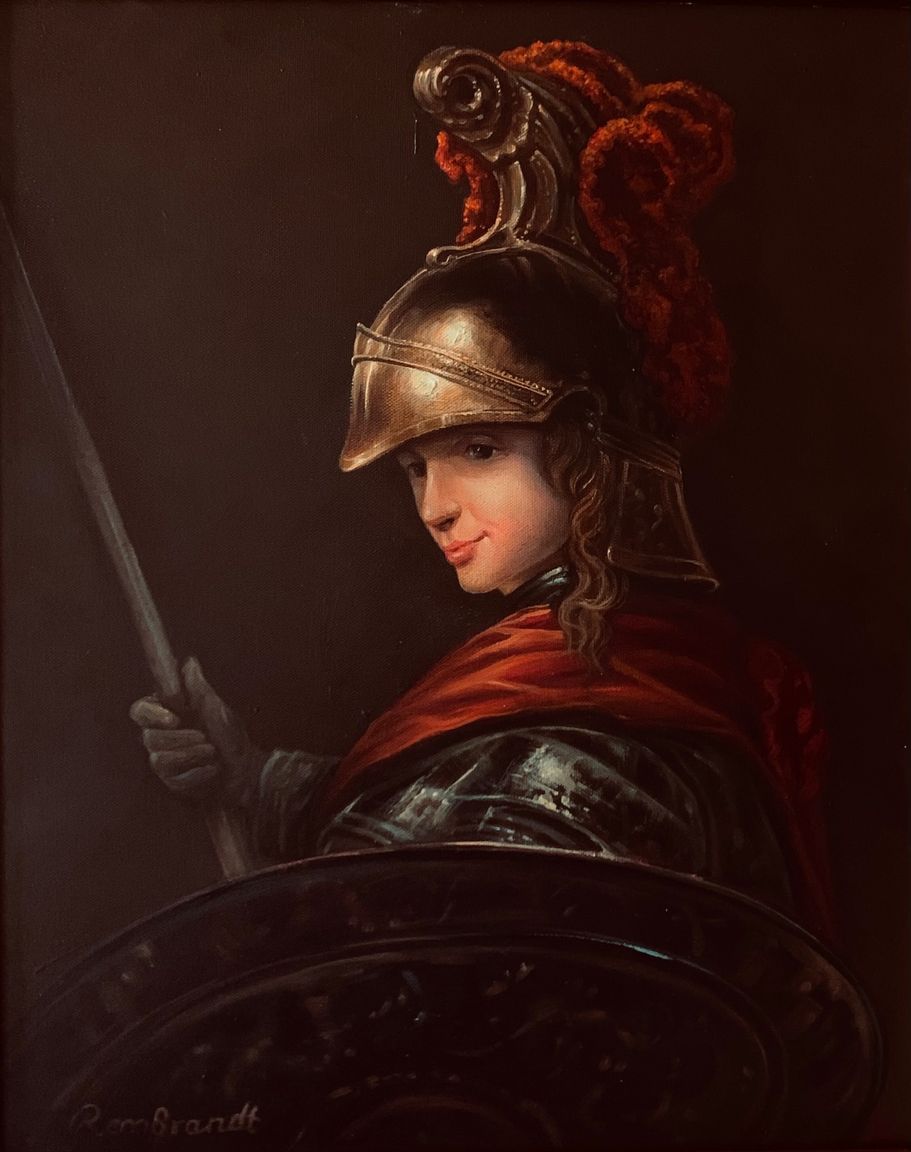
The engagement with the Old Masters represents a distinctive facet of Herbert Duttler's diverse artistic oeuvre. In these works, the artist turns to significant figures in European art history, intensively exploring their compositions, use of colour and painting techniques. His focus extends beyond the faithful reproduction of historical models.
Rather, the study of these masterpieces becomes a means of exploring the artistic craftsmanship and compositional principles that shaped European painting over centuries.
Duttler's engagement with historical painting techniques and his exceptional technical versatility become particularly evident in these works. The handling of light, the rendering of textures, spatial effects and subtly graduated colours demand a high degree of painterly precision.
His works after the Old Masters therefore not only document his appreciation of art-historical models, but also reveal the foundations of craftsmanship upon which the extraordinary stylistic breadth of his own artistic oeuvre is based.
Rembrandt
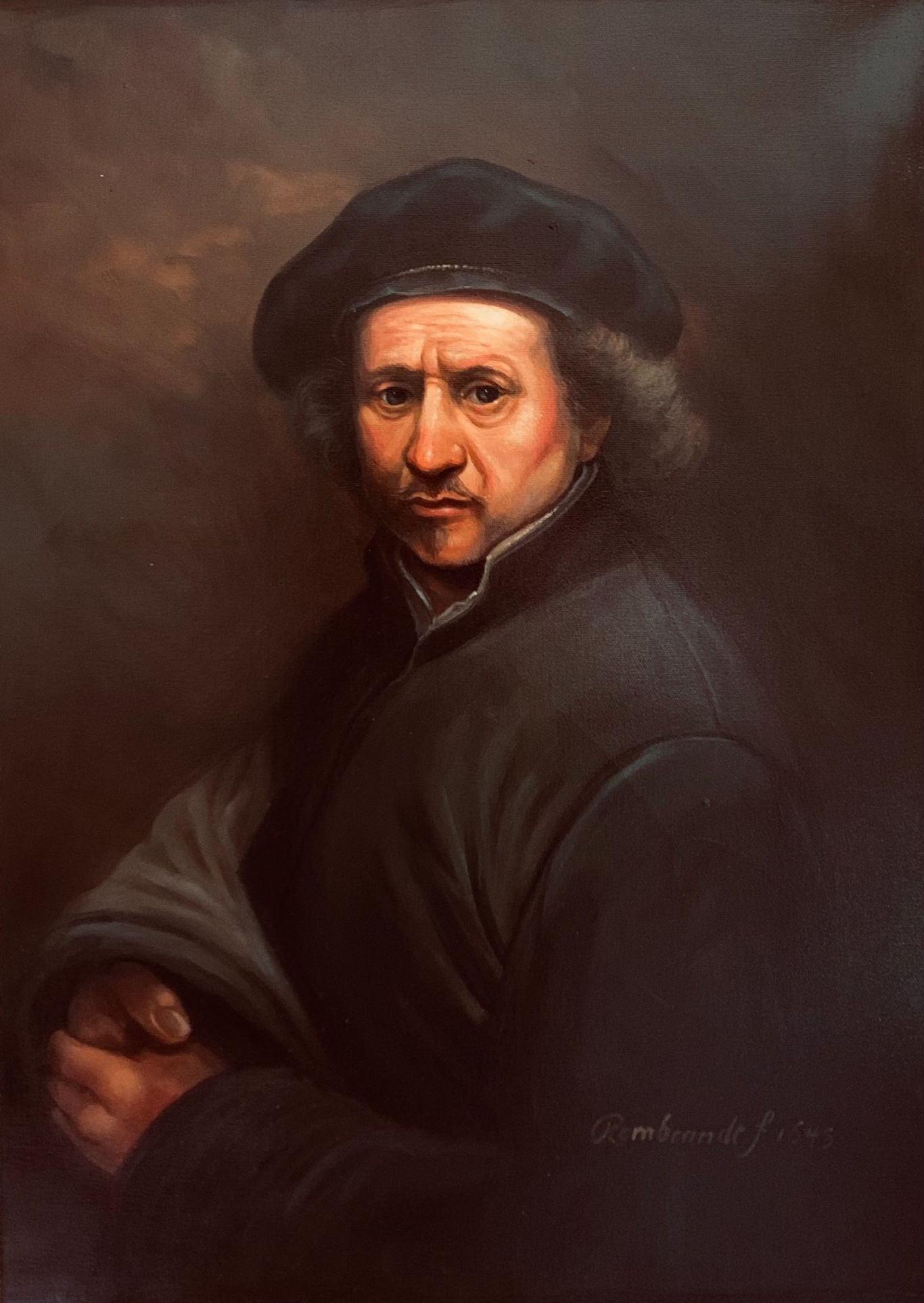
After a self-portrait by Rembrandt
Oil on canvas, 2014
Rembrandt signature recto · Duttler signature verso
With Rembrandt, Herbert Duttler pays tribute to one of the greatest masters of European painting. Taking one of Rembrandt's famous self-portraits as his starting point, Duttler captures its characteristic visual impact and interprets it through his own distinctive painterly style. At the centre are the striking physiognomy, the modelling effect of light and shadow, and the psychological presence characteristic of Rembrandt's portraiture.
Self-portraits occupied an exceptional position in Rembrandt's oeuvre and accompanied him throughout almost every phase of his artistic career.
A particular homage is also expressed through the signature: Duttler placed Rembrandt's signature on the front of the painting, while his own signature appears on the reverse. He applied the same principle to Pallas Athene and Alexander der Große. The signature thus deliberately becomes part of the art-historical reference, emphasising Duttler's respectful dialogue with his artistic predecessor.